
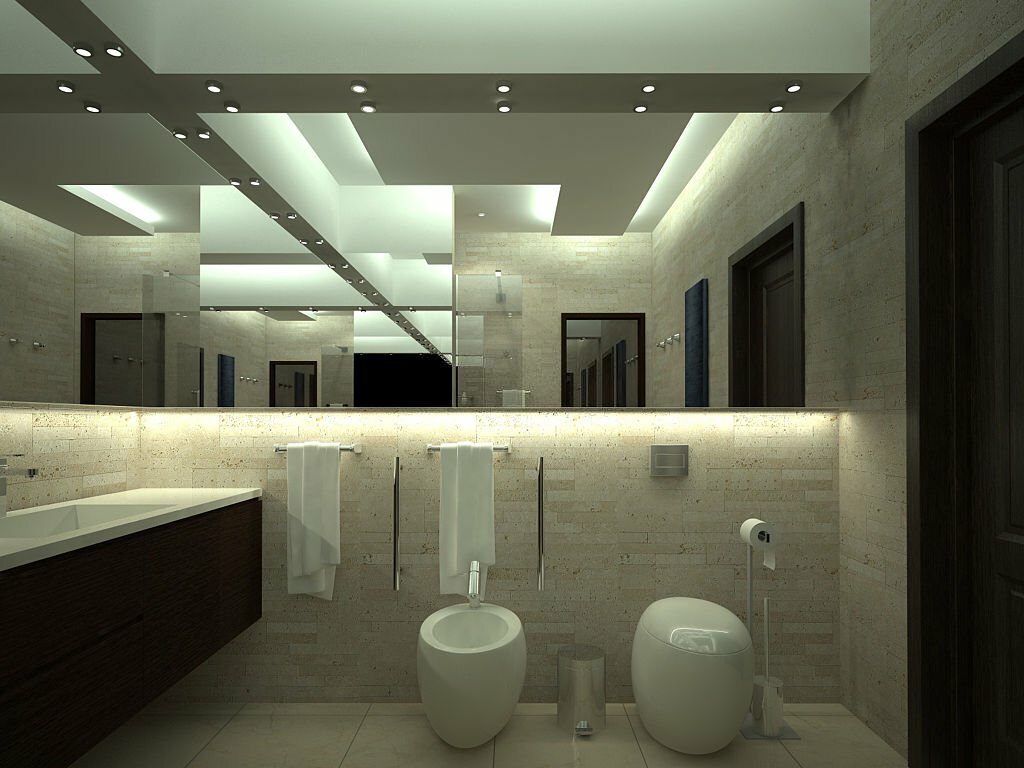
An IP rating tells you how an enclosure protects against solid objects and water under specified test conditions. For an LED bathroom mirror, it is a useful part of the specification, but it does not by itself tell you where the mirror can be installed. Check what the rating covers, then plan the location and electrical connection with your installer.
Once that practical detail is settled, you can enjoy choosing the shape and lighting. Browse LED bathroom mirrors by size and features to find a design that makes your vanity feel complete.
What the two IP numbers mean
The first number concerns protection against solid objects and access; the second concerns water ingress. As examples, IP44 indicates protection against solid objects of 1 mm or larger and splashing water, while IP65 indicates dust protection and water-jet protection under the relevant tests. Neither description means that a mirror can be submerged or installed anywhere in a bathroom. TÜV Rheinland’s IP testing explanation sets out the different categories.
Check whether the rating covers the whole mirror
A specification may describe the LED strip rather than the assembled mirror. That matters because a strip rating does not automatically describe the controls, power supply, cable entry or complete enclosure. Read the wording beside the number instead of treating every IP reference as the same promise.
Keep the product instructions and installation information with your renovation plan. Your electrician can assess the intended position, water exposure and electrical arrangement together. A higher-looking number is not a substitute for that assessment, and anti-fog is a separate function rather than an IP rating.
For a compact vanity: keep the useful features

The 40 × 50 cm frontlit mirror combines three light colours, dimming, memory and anti-fog in a compact rectangle. It is a useful starting point when the basin wall is narrow and you want illumination towards your face. Our small Australian bathroom mirror guide covers proportion and practical placement.
For a softer silhouette: an oval with a rear glow

The 80 × 50 cm oval backlit mirror adds dimming, three light colours, memory and anti-fog to a curved outline. The rear glow brings atmosphere to the wall. Choose the lighting effect for the room, then assess installation suitability separately rather than assuming a decorative shape changes the electrical requirements.
For more design context, compare traditional and LED mirrors, explore the mood created by mirror lighting and read using reflections to open up a small room.
For a circular focal point: a dimmable round mirror

The 60 cm round backlit mirror offers dimming, three light colours, memory and anti-fog. It suits a vanity where you want a clean circular feature. Check the actual wall space, taps and nearby fittings before deciding on diameter; our vanity mirror size guide and 1200 mm double-vanity guide help with those choices.
A simple buying checklist
- Read exactly which component or complete product the IP rating describes.
- Plan the mirror position and fixed electrical work with a licensed electrician.
- Choose front lighting for face illumination or a rear glow for atmosphere.
- Select anti-fog for a more usable reflection after showering.
- Check dimensions and controls against your daily routine.
Explore the everyday benefits of LED mirrors and the components behind an illuminated mirror. For the finishing decision, compare light colour settings or mirror features side by side.
Choose a mirror that feels right in your bathroom and is planned properly for its position. Discover the designs at LED Mirror World AU and turn the vanity into a brighter part of your routine.