
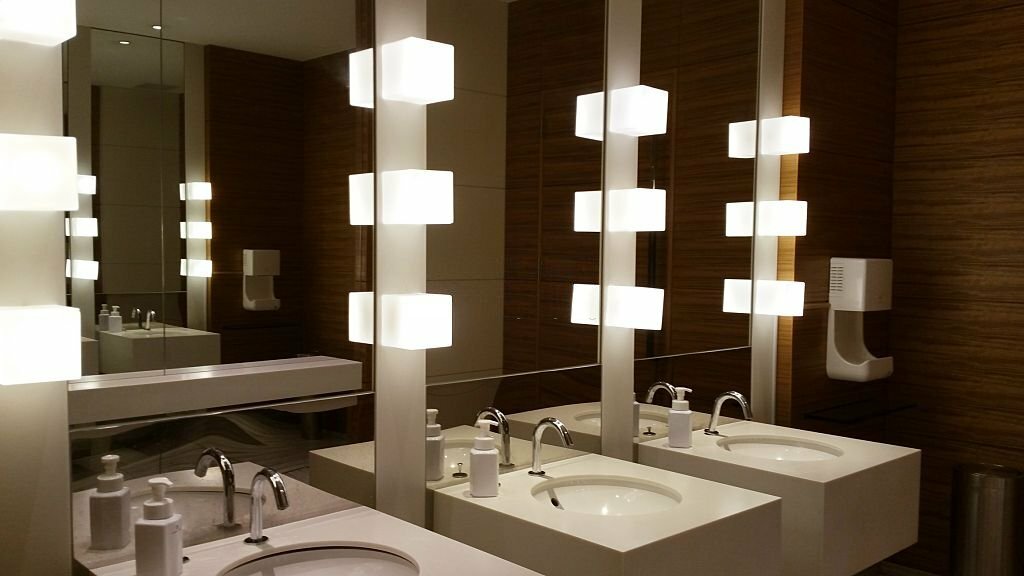
For a bathroom used for both grooming and relaxing, adjustable warm, neutral and cool white lighting gives you more flexibility than one fixed tone. A neutral-looking setting is a useful starting point for everyday preparation, while warmer light can create a softer atmosphere. The best choice is the setting that feels comfortable in the actual room.
Explore LED Mirror World Australia for three-colour options. Colour temperature, brightness and colour rendering describe different things; a cooler light is not automatically brighter or more accurate for makeup.
What Kelvin tells you
Colour temperature is expressed in Kelvin. Lower numbers describe warmer-looking white light, while higher numbers describe a cooler appearance. Around 2700–3000 K is commonly called warm white; around 4000 K is often described as neutral white; higher settings around 5000–6500 K look cooler. Naming can vary between products, so compare the stated settings.
Colour rendering describes how colours appear under the light and is separate from its white tone. Changing to a cool setting alone does not guarantee accurate foundation matching. See lighting a vanity for makeup and makeup mirror lighting for the full arrangement.
Match the light direction to the routine
The 40 × 50 cm frontlit LED mirror combines three colour settings with dimming, memory and anti-fog. Front light is useful when the main aim is a clearer view of the face at a smaller basin.

Dimming changes intensity. If the reflection feels harsh, reducing brightness may help more than changing the tone. Read how bright a bathroom mirror should be and when dimming is worth choosing.
A softer wall glow for atmosphere
The 60 cm HaloGlow backlit mirror offers three colour settings, memory and anti-fog. Compare its glow with your tiles and cabinetry, and keep a separate useful light layer for grooming where needed.

Warm and cool settings change how finishes look, so test them with the room’s other lights. You can choose a calmer-looking evening setting without treating a mirror as a sleep or circadian-health device.
A wider reflection with both lighting directions
The 120 × 60 cm frontlit and backlit mirror adds three colour settings, dimming, memory and anti-fog to a broader vanity. It suits a room where you want face-directed illumination as well as a rear glow.

Placement still matters. Read how lighting and mirror placement work together and reducing facial shadows before expecting a different Kelvin setting to solve a directional-lighting problem.
Choose around your home, not a single “perfect” number
Compare settings at the time you normally get ready, with the room’s other lights on. Decide whether the priority is grooming, a softer atmosphere or flexibility for a shared bathroom. Your preference can differ from the light shown in a product photograph.
Use our makeup lighting temperature guide for more detail, and the LED mirror renovation guide to plan size, mounting and power together. Comfortable light, useful direction and practical controls make a better choice than Kelvin alone.